Driveway Concrete Lifting Specialists
Olympic Concrete Lifting provides professional driveway concrete lifting for sunken, uneven, and poorly supported driveway slabs throughout the Kansas City area.
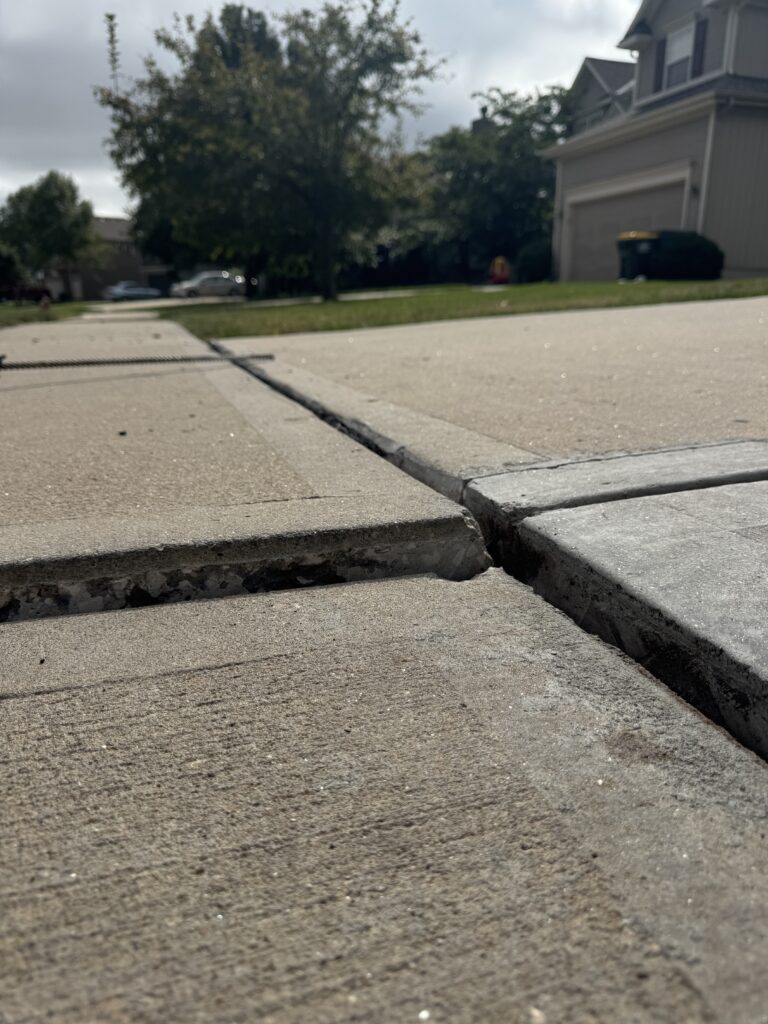
When soil beneath a driveway settles, erodes, or develops hidden voids, sections of concrete can begin to sink and create uneven joints, rough vehicle transitions, drainage problems, and gaps near the garage. Polyjacking can often lift and stabilize structurally sound driveway slabs without tearing out and replacing the entire surface.
Restore Your Driveway Without Replacing It
A driveway can remain structurally sound even after the material beneath it begins to move. Soil compression, erosion, poor compaction, and drainage can all reduce the support below individual slabs and cause sections to settle at different rates.
That movement may show up as an uneven joint, a noticeable drop near the garage, standing water, or a section of driveway that sits lower than surrounding concrete.
Concrete leveling & polyjacking works beneath the existing driveway by injecting expanding polyurethane foam into areas where support has been lost. The foam fills voids, stabilizes the slab, and can carefully raise qualifying sections toward their intended elevation.
Signs Your Driveway May Need Lifting
Uneven Slab Joints
Drop at the Garage
Standing Water
Gaps Beneath the Concrete
Why Driveway Settlement Matters
A driveway carries vehicles every day and connects several important surfaces around the home. The driveway may meet the garage floor, sidewalk, street, curb, or front walkway within a relatively small area.
When one section settles, the result can affect more than appearance. Vehicle transitions can become rougher, water may begin collecting in low areas, and adjoining slabs can develop noticeable elevation differences.
Olympic Concrete Lifting evaluates the entire driveway and surrounding transitions before determining where lifting or stabilization makes sense.
Benefits of Driveway Concrete Lifting
When the existing slabs remain structurally sound, driveway lifting can restore settled areas without turning the property into a major demolition project. Polyurethane foam addresses the support beneath the concrete while allowing the driveway itself to remain in place.
Improve Vehicle Transitions
Correcting uneven slabs can create smoother transitions between driveway sections and the garage floor.
Preserve Existing Concrete
A sunken driveway does not automatically need replacement when the slabs themselves are still in good condition.
Improve Drainage
Raising low sections may help restore the intended slope where water has started collecting or moving in the wrong direction.
Restore Slab Support
Polyurethane foam fills voids beneath the concrete and helps support areas affected by erosion or soil movement.
Reduce Disruption
Polyjacking avoids much of the demolition, debris, heavy equipment, and curing time associated with replacing a driveway.
Improve Curb Appeal
A more even driveway can make the entire front of the property look cleaner and better maintained.
The Driveway-to-Garage Transition
When the Driveway Sinks Away From the Garage
The driveway and garage floor are separate slabs, which means they can settle independently. If the exterior driveway drops while the garage floor remains in place, a lip can develop at the garage opening.
That uneven transition can become noticeable every time a vehicle enters or exits the garage.
If the driveway is the primary source of the elevation difference, lifting the exterior slab may help restore a smoother transition. If the garage floor has also settled, both areas may need to be evaluated.
What Causes Driveways to Sink?
Poor Soil Compaction
Water & Erosion
Soil Settlement
Hidden Voids
Downspouts that discharge near a driveway or garage approach can concentrate water along slab edges and contribute to soil loss. Downspout Extensions can help move roof runoff farther from the concrete. Where support has been lost without significant slab movement, void filling may help stabilize the concrete before additional settlement occurs.
Lift the Driveway or Replace It?
Lift the Existing Driveway
If the concrete remains structurally sound, polyurethane foam can fill voids and raise settled areas while preserving the existing slabs.
Replace the Driveway
Concrete that is severely fractured, crumbling, extensively deteriorated, or otherwise unsuitable may need to be removed and repoured.
Driveway lifting is not about avoiding replacement at all costs. It is about preserving good concrete when the problem is primarily beneath the slab.
Our Driveway Lifting Process
Evaluate the Driveway
We inspect the slab condition, settlement, garage transition, drainage, cracks, and areas where support may have been lost.
Identify the Problem Areas
We determine which slabs need lifting, stabilization, or another type of repair.
Plan the Lift
Injection locations are selected based on the driveway layout and how the affected slabs relate to surrounding surfaces.
Lift & Stabilize
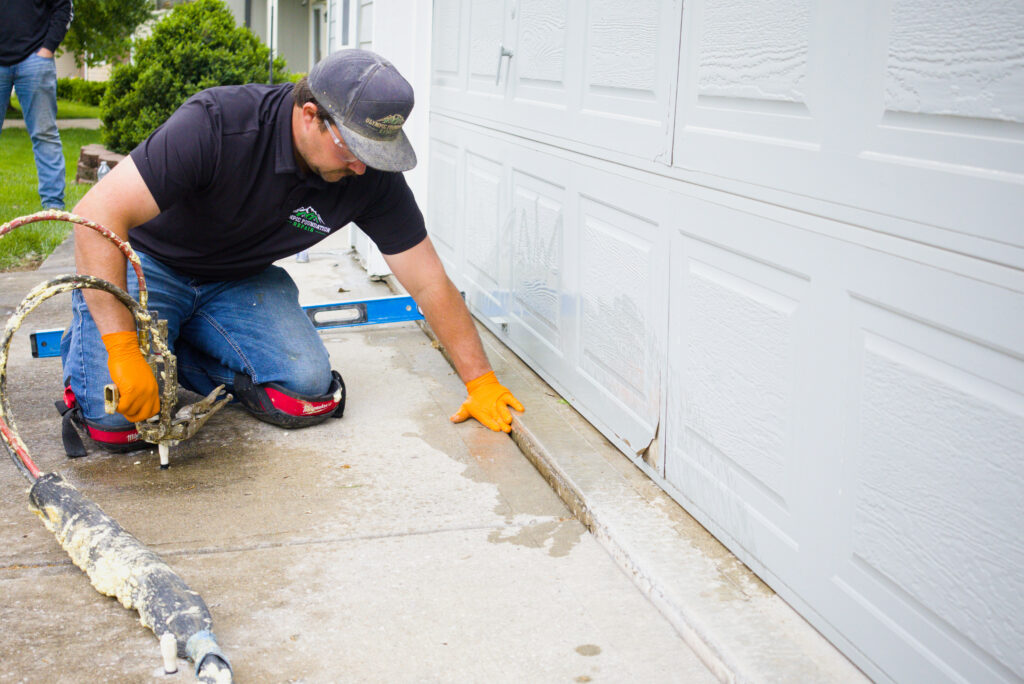
Polyurethane foam is injected beneath the concrete to fill voids, restore support, and carefully raise qualifying sections.
Review the Transitions
The completed repair is checked against neighboring slabs, the garage, sidewalks, and other adjoining surfaces.
When the Driveway Needs More Than Lifting
Settlement may not be the only issue affecting an older driveway.
Cracks, damaged edges, worn joints, and years of staining can all remain after the slab elevation is corrected. Olympic Concrete Lifting can combine driveway lifting with concrete repair, joint sealing, and power washing where appropriate.
If nearby Residential Walkways or Stoops & Steps have also settled, those areas can be evaluated during the same assessment.
Drainage Around Your Driveway
Driveways collect a large amount of rainwater and runoff. If water repeatedly travels along slab edges, through open joints, or toward poorly draining areas, it can gradually affect the soil beneath the concrete.
Settlement can then make the drainage problem worse by creating low spots or redirecting water toward the garage, house, or landscaping. Roof runoff can add to the problem when downspouts discharge too close to the driveway, and Downspout Extensions can help move that water farther from vulnerable slab edges and supporting soil.
Correcting slab elevation can help restore the relationship between the driveway and surrounding surfaces, while Joint Sealing may help reduce water and debris entering vulnerable joints.
Driveway Concrete Lifting FAQs
What causes a concrete driveway to sink?
Driveways can settle because of soil compression, poor compaction, erosion, drainage problems, moisture changes, or voids beneath the slabs.
Can a sunken driveway be lifted instead of replaced?
Often, yes. If the concrete remains structurally sound, concrete leveling & polyjacking may be able to lift and stabilize the affected slabs.
Can driveway lifting fix the lip at my garage?
If the driveway has settled away from the garage floor, lifting the exterior slab may improve the transition. If the garage floor has also moved, both surfaces should be evaluated.
Can you fill voids beneath a driveway without lifting it?
Yes. If the slab has lost support but is still close to the proper elevation, void filling may be used primarily for stabilization.
Can cracked driveway concrete still be lifted?
Minor cracking does not automatically prevent lifting. More significant damage may also require concrete repair or replacement.
Can driveway lifting help with standing water?
If settlement has created a low area, correcting the slab elevation may improve drainage. Other grading or drainage conditions may also need to be addressed.
Can the walkway next to my driveway be lifted too?
Yes. Nearby Residential Walkway Lifting can be evaluated as part of the same project.
Can the driveway be cleaned after lifting?
Yes. Power washing can help refresh the surface, especially when lifting is part of a larger restoration project.