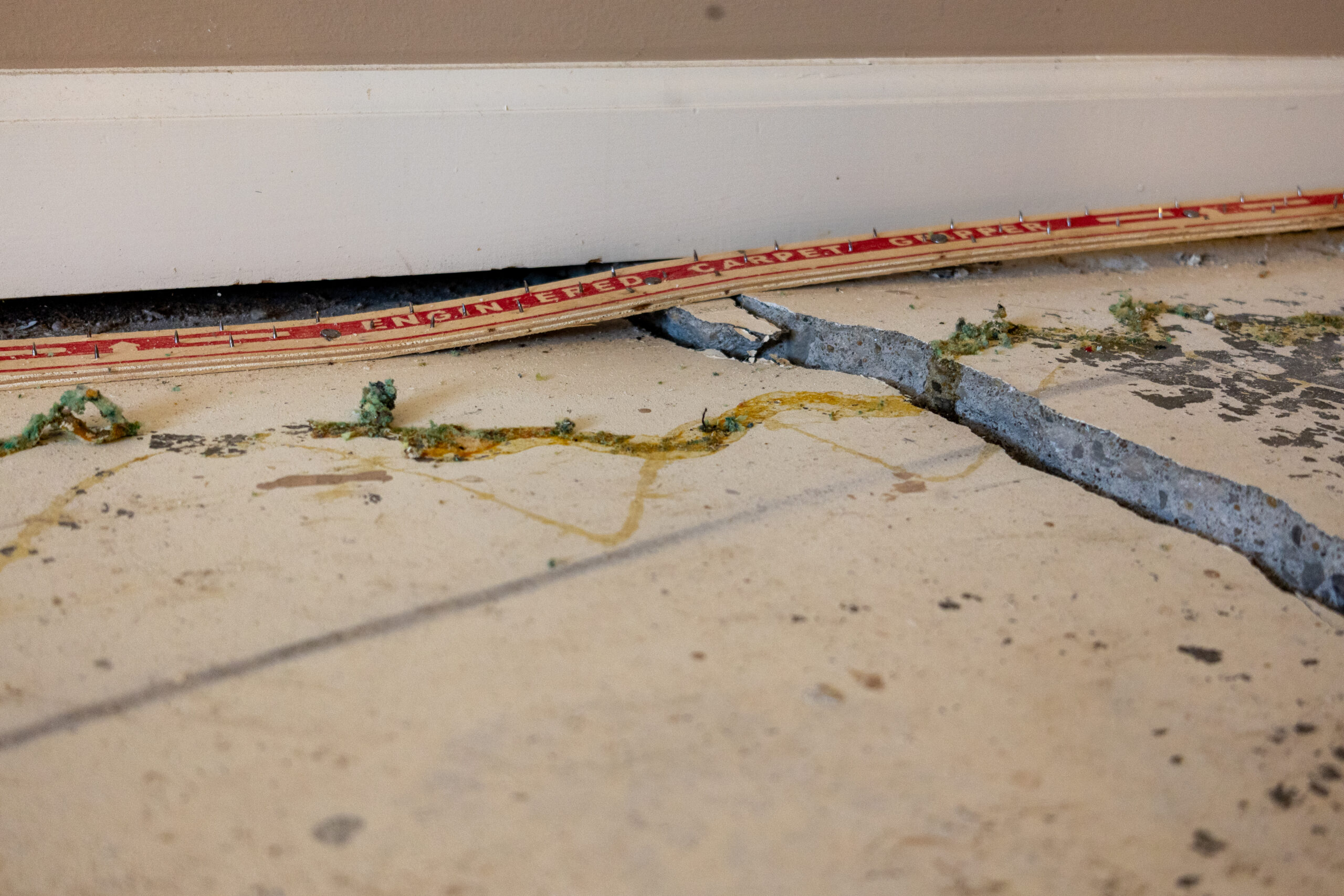
Basement Floor Concrete Lifting Specialists
Olympic Concrete Lifting provides professional basement floor concrete lifting and stabilization for settled, uneven, and unsupported concrete slabs throughout the Kansas City area.
When material beneath a basement floor compresses, shifts, or leaves empty spaces, portions of the slab can begin to sink or lose support. Polyjacking can often fill those voids and carefully restore qualifying concrete without tearing out large sections of the existing floor.
Restore Support Beneath Your Basement Floor
Basement concrete may be protected from outdoor traffic and weather, but the material beneath the slab can still change over time. Settlement, poorly compacted fill, moisture movement, or hidden voids can leave sections of the floor without consistent support.
As the slab moves, homeowners may notice low areas, cracks, uneven transitions, or gaps where the floor meets surrounding surfaces.
Concrete leveling & polyjacking allows polyurethane foam to be injected beneath the basement slab, where it expands into empty spaces and restores support. If the primary problem is a void beneath concrete that has not significantly settled, void filling may be used mainly for stabilization.
Signs Your Basement Floor May Be Settling
Uneven or Low Areas
Cracks With Elevation Changes
Gaps Along Edges
Hollow or Unsupported Areas
Why Basement Floor Support Matters
A basement floor relies on consistent support from the material underneath it. When voids develop, portions of the slab can become unsupported and begin moving independently from surrounding areas.
That does not automatically mean the entire basement floor needs to be replaced. When the concrete itself remains structurally sound, lifting or stabilization may be able to address the problem from beneath the slab while preserving the existing surface.
Olympic Concrete Lifting evaluates the affected area, surrounding floor elevations, visible cracking, and signs of lost support before determining whether polyurethane lifting is appropriate.
Benefits of Basement Floor Leveling
Polyjacking provides a way to address settlement beneath an interior slab without automatically demolishing the existing basement floor. Expanding polyurethane foam can reach hidden spaces beneath the concrete while keeping the repair focused on the areas that actually need attention.
Restore Slab Support
Polyurethane foam fills empty spaces beneath the floor and helps support areas where underlying material has settled or shifted.
Correct Uneven Areas
Qualifying sections of the slab can be carefully raised toward the elevation of the surrounding floor.
Preserve Existing Concrete
A structurally sound basement slab may still have years of useful life even when support underneath has been lost.
Limit Interior Demolition
Small injection points can help avoid removing large sections of concrete inside the home.
Lightweight Material
Polyurethane foam restores support without adding the significant weight associated with heavier cement-based materials.
Fast Cure Time
The foam cures quickly, helping reduce the lengthy downtime involved with removing and repouring basement concrete.
Basement Floor Settlement or Foundation Movement?
A basement floor can settle because the material directly beneath the slab has compressed or developed voids. In those situations, the issue may be limited primarily to the concrete floor itself.
Other signs around the basement may point to a different or broader structural concern. Significant wall movement, changes around doors or windows, or other structural symptoms should not automatically be assumed to come from the floor slab.
Olympic Concrete Lifting focuses on lifting and stabilizing concrete. We evaluate the condition of the floor before recommending polyjacking, and if the problem appears to extend beyond the slab, additional evaluation may be appropriate.
Floor Slab Settlement
Low spots, unsupported areas, or elevation changes within the concrete floor.
Possible Broader Movement
Conditions involving walls, structural components, or areas outside the floor itself may require a different type of evaluation.
What Causes Basement Floors to Settle?
Unlike exterior slabs, basement floors are not exposed directly to rain and traffic, but changes can still occur beneath them.
Poorly Compacted Fill
Soil Settlement
Moisture Movement
Hidden Voids
Leveling vs. Stabilizing a Basement Floor
Basement Floor Leveling
If part of the slab has already sunk, polyurethane foam may be used to fill the space beneath it while carefully raising the concrete toward the surrounding elevation.
Basement Floor Stabilization
If support has been lost but the slab has not significantly moved, void filling may be used mainly to fill empty space and stabilize the concrete.
Some basement floors may require a combination of both depending on conditions beneath different parts of the slab.
Our Basement Floor Lifting Process
Evaluate the Floor
We inspect settlement, cracks, surrounding elevations, visible signs of lost support, and conditions throughout the affected area.
Plan the Repair
Injection locations and the amount of stabilization or lifting are determined based on the slab and surrounding surfaces.
Inject Polyurethane Foam
Small holes are created in selected locations so expanding polyurethane foam can reach empty spaces beneath the floor.
Lift & Stabilize
The foam fills voids, restores support, and carefully raises qualifying sections where elevation correction is needed.
What About Plumbing & Utilities Beneath the Floor?
Basement slabs may contain or cover plumbing, drains, utility lines, and other components that need to be considered before concrete is drilled or lifted.
The layout and known conditions of the floor should be reviewed before work begins. Depending on the property and repair location, additional information about buried utilities or plumbing may be needed before determining the appropriate lifting approach.
When the Basement Floor Needs More Than Lifting
Settlement may occur alongside cracks or surface deterioration that polyjacking alone will not correct.
If the slab is structurally sound but has localized damage, concrete repair may be appropriate after elevation and support issues are addressed. Floors with severely deteriorated or extensively broken concrete may be better suited for replacement instead of lifting.
Olympic Concrete Lifting evaluates both the position and condition of the slab so the recommended solution addresses the actual problem rather than simply raising damaged concrete.
Basement Floor Concrete Lifting FAQs
What causes a basement floor to sink?
Settlement can result from poorly compacted fill, soil compression, moisture movement, erosion, or voids that develop beneath the concrete.
Can a sunken basement floor be lifted?
Often, yes. If the slab remains structurally sound, concrete leveling & polyjacking may be able to restore support and carefully raise settled areas.
Can voids be filled without lifting the floor?
Yes. If the slab is still at an acceptable elevation but has lost support underneath, void filling may be used primarily for stabilization.
Does an uneven basement floor mean I have foundation problems?
Not necessarily. Settlement can sometimes be limited to the floor slab itself. Other structural conditions should be evaluated separately when signs extend beyond the concrete floor.
Can cracked basement concrete still be lifted?
Minor cracking does not automatically rule out lifting. More significant deterioration may also require concrete repair or replacement depending on the slab’s condition.
Can polyurethane foam be used indoors?
Polyurethane concrete lifting can be used for qualifying interior slabs, including basement and garage floors, when access and site conditions allow.
What about plumbing beneath the basement floor?
Plumbing, drains, utilities, and other components beneath the slab must be considered when planning injection locations and the repair approach.
How do I know whether my basement floor needs lifting or replacement?
The condition of the concrete, amount of settlement, support beneath the slab, and surrounding conditions all matter. An assessment can determine whether lifting, stabilization, repair, or replacement makes the most sense.