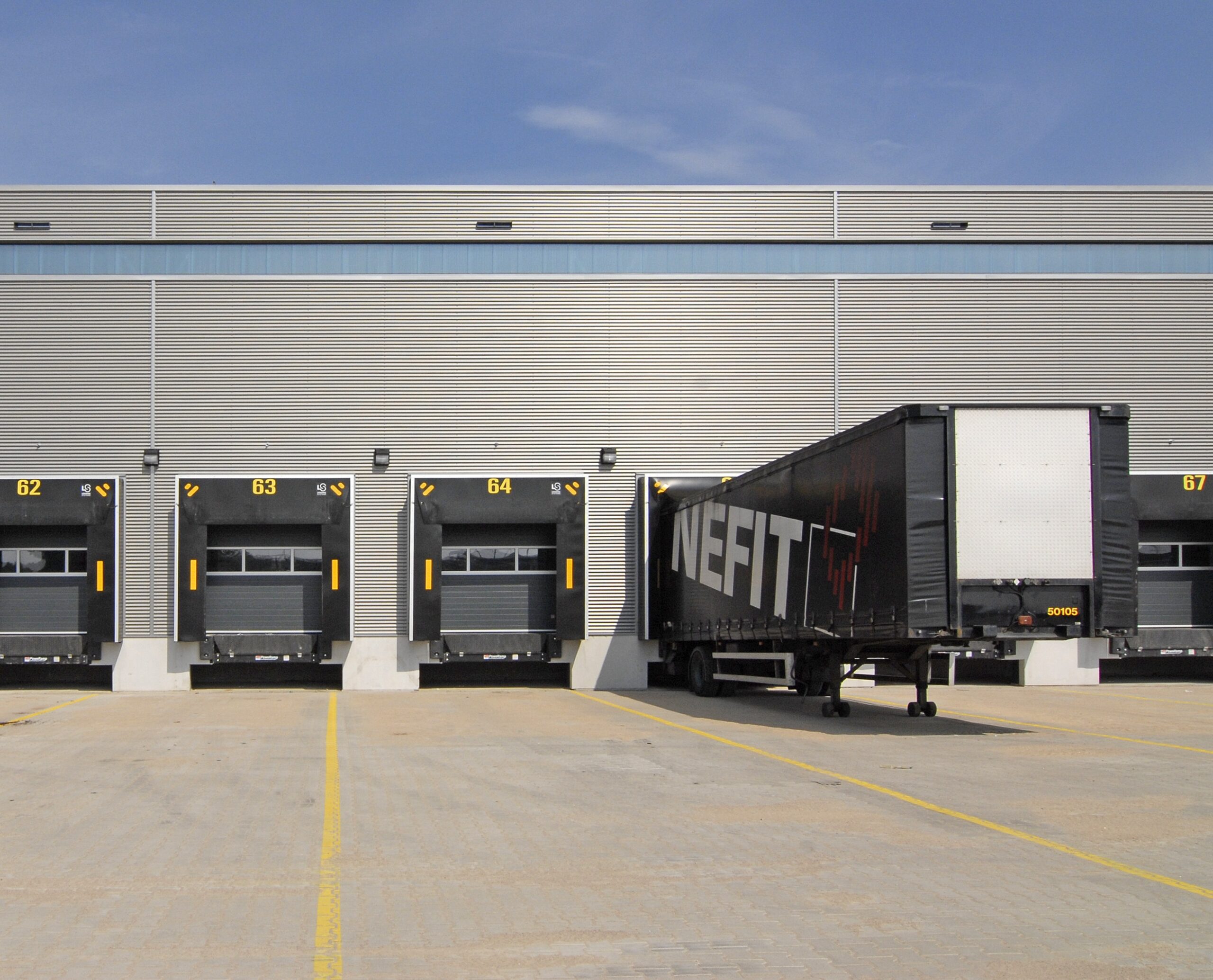
Loading Dock Concrete Lifting Specialists
Olympic Concrete Lifting provides professional loading dock concrete lifting and stabilization for warehouses, distribution centers, manufacturing facilities, retail operations, and other commercial properties throughout the Kansas City area.
Settlement around loading areas can create uneven slab transitions, drainage problems, and rough surfaces where trucks, forklifts, pallet jacks, employees, and equipment move throughout the day. Polyjacking can often restore qualifying concrete while avoiding the demolition and extended downtime associated with full replacement.
Keep Your Loading Areas Moving
Loading docks are some of the hardest-working areas on a commercial property. Repeated vehicle traffic, heavy loads, drainage, weather exposure, and changing soil conditions can all contribute to concrete movement over time.
When the supporting material beneath a slab settles or washes away, sections of concrete can sink and create uneven transitions between the dock, approach slabs, drive lanes, and surrounding surfaces.
Concrete leveling & polyjacking allows polyurethane foam to be injected beneath settled slabs, filling empty spaces and carefully restoring elevation. If the slab has lost support without significant movement, void filling may be used primarily to stabilize the concrete.
Where Loading Dock Settlement Creates Problems
Dock Approach Slabs
Slab Transitions
Drainage Areas
Voids Beneath Concrete
Why Loading Dock Concrete Needs Stable Support
Loading dock concrete does more than provide a walking surface. It may support frequent truck traffic, forklifts, pallet jacks, material handling, stored loads, and equipment moving between interior and exterior areas.
When support beneath the slab becomes inconsistent, movement at the surface can interfere with these transitions and place additional stress on the existing concrete.
Polyurethane lifting focuses on restoring support underneath the slab while preserving structurally sound concrete whenever possible. Olympic Concrete Lifting evaluates the slab, surrounding surfaces, traffic patterns, and visible settlement before determining whether lifting or stabilization is appropriate.
Benefits of Loading Dock Concrete Lifting
Commercial repairs around loading areas need to improve the concrete without creating unnecessary interruptions to the operation itself. Polyjacking offers a less invasive way to correct settlement and restore support beneath qualifying slabs.
Improve Surface Transitions
Correcting settled concrete can help create smoother transitions between dock approaches, drive areas, warehouse floors, and adjoining slabs.
Minimize Downtime
Polyurethane foam cures quickly and avoids much of the demolition, removal, repouring, and extended curing time associated with replacement.
Preserve Existing Concrete
Structurally sound slabs can often remain in place rather than being removed simply because the supporting soil underneath has changed.
Restore Slab Support
Polyurethane foam expands into voids beneath the concrete and helps restore support in areas affected by settlement or erosion.
Improve Drainage
Lifting can help restore surface slopes where settlement has caused unwanted water collection around the loading area.
Reduce Disruption
Small injection points and minimal demolition help keep the repair footprint smaller around an active facility.
Loading Dock Lifting vs. Replacement
Concrete Lifting
When the slab remains structurally sound, polyurethane foam can fill voids and carefully raise settled areas while leaving most of the existing concrete intact.
Concrete Replacement
Concrete that is severely fractured, deteriorated, or no longer suitable for the loads placed on it may need to be removed and repoured.
For an active loading facility, preserving usable concrete can reduce demolition, debris, curing time, and disruption. The right option ultimately depends on the condition of the slab—not simply whether settlement is visible.
Our Loading Dock Concrete Lifting Process
Evaluate the Loading Area
We inspect settlement, slab condition, surrounding concrete, drainage, and areas where support may have been lost.
Plan Around Operations
The repair approach considers traffic routes, dock access, equipment movement, and other site conditions.
Lift & Stabilize
Polyurethane foam is injected beneath qualifying slabs to fill voids, restore support, and carefully correct settlement.
Check the Transitions
The repaired concrete is reviewed against surrounding slabs, dock areas, and travel surfaces.
Where Loading Dock Problems Often Connect
Settlement around a loading dock is not always limited to the exterior approach. The same soil, drainage, traffic, and support conditions may also affect nearby warehouse floors, shop floors, ramps & walkways, and equipment pads.
Olympic Concrete Lifting can evaluate multiple areas around the facility and determine whether each slab needs lifting, stabilization, surface repair, or another solution.
This is especially useful at larger commercial and industrial properties where several concrete problems may share the same underlying conditions.
What If the Concrete Is Damaged Too?
Settlement and surface deterioration often occur together.
A loading dock slab may need lifting to restore its elevation while also having cracks, damaged joints, or worn areas that require additional attention. Olympic Concrete Lifting can combine lifting with concrete repair and joint sealing where appropriate.
If empty spaces exist beneath concrete that has not significantly settled, dedicated void filling may also help restore support without substantially changing the slab elevation.
Loading Dock Concrete Lifting FAQs
What causes loading dock concrete to settle?
Settlement can result from soil compression, poor compaction, water erosion, drainage problems, repeated moisture changes, or voids that develop beneath the slab.
Can a loading dock slab be lifted instead of replaced?
Often, yes. If the existing concrete remains structurally sound, concrete leveling & polyjacking may be able to restore the slab without complete demolition and replacement.
Can lifting be performed at an active facility?
Many commercial lifting projects can be planned around ongoing operations. Access, traffic, equipment, and the size of the repair all affect how the work is coordinated.
Can you lift concrete used by forklifts?
Potentially. The slab condition, loads, settlement, surrounding concrete, and site conditions all need to be evaluated before determining the appropriate repair.
What if there are voids beneath the loading dock?
Polyurethane foam fills empty spaces as part of the lifting process. Concrete that primarily needs support rather than elevation correction may benefit from void filling.
Can cracked loading dock concrete still be lifted?
Minor cracking does not automatically prevent lifting. More substantial damage may require concrete repair or replacement depending on the condition of the slab.
Can warehouse floors be leveled too?
Yes. Settlement affecting interior slabs may be addressed through our warehouse floor concrete lifting services when conditions allow.
Does concrete lifting fix loading dock equipment?
No. Olympic Concrete Lifting addresses the concrete slab and supporting conditions beneath it. Dock levelers, doors, mechanical equipment, and connected components may require evaluation by the appropriate equipment professional if they are affected.