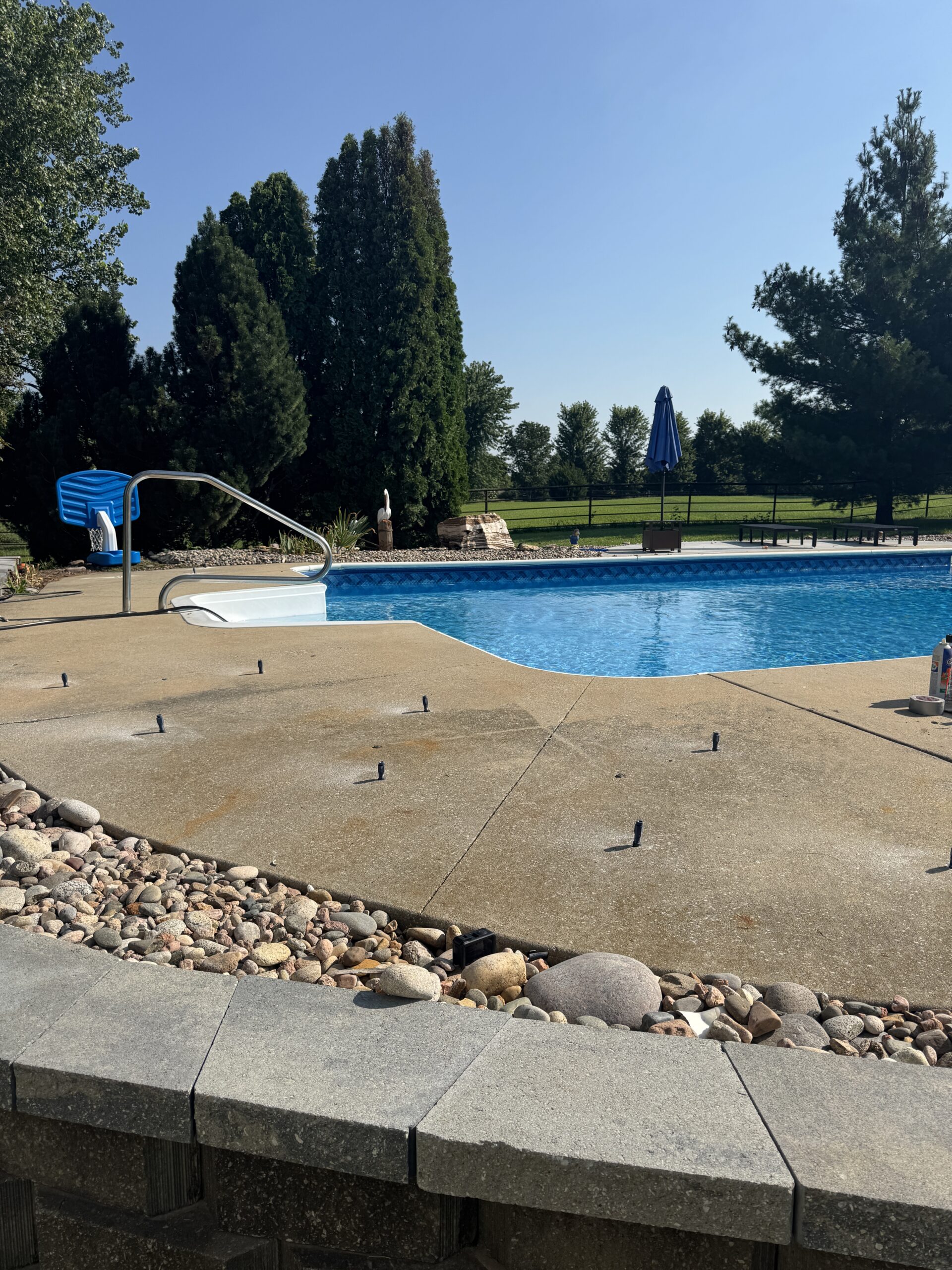
Pool Deck Concrete Lifting Specialists
Olympic Concrete Lifting provides professional pool deck concrete lifting for sunken, uneven, and poorly supported concrete throughout the Kansas City area.
When sections of a pool deck settle, uneven transitions can develop between slabs, coping, walkways, and surrounding surfaces. Polyjacking can often lift and stabilize structurally sound concrete while avoiding the demolition, debris, and disruption that come with replacing large portions of the pool deck.
Restore a Safer, More Functional Pool Deck
Pool decks are constantly exposed to water, weather, foot traffic, and changing soil conditions. Over time, erosion or settlement beneath the concrete can cause individual slabs to sink at different rates.
That movement can create raised edges, low areas, drainage problems, and uneven transitions around one of the most frequently used outdoor spaces on the property.
Concrete leveling & polyjacking works beneath the existing slab by injecting expanding polyurethane foam into areas where support has been lost. The foam fills voids, stabilizes the concrete, and carefully raises qualifying sections toward their proper position.
Common Pool Deck Settlement Problems
Uneven Slab Transitions
Low Areas & Standing Water
Gaps Near the Pool
Voids Beneath the Deck
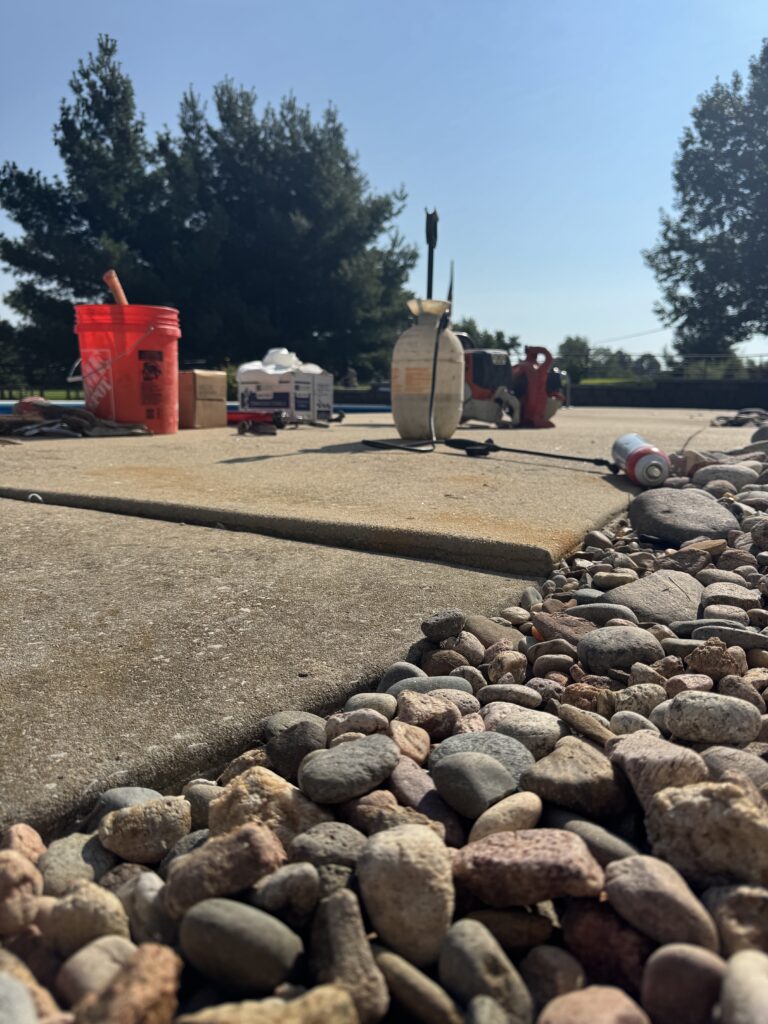
Why Pool Deck Settlement Deserves Attention
A pool deck is different from many other concrete surfaces because people frequently walk across it barefoot and while the surface is wet.
Even relatively small elevation differences can become more noticeable around a pool, especially at slab joints, pathways, and transitions between the deck and nearby surfaces.
The deck also plays an important role in moving water away from areas where it should not collect. Olympic Concrete Lifting evaluates slab elevation, drainage, surrounding concrete, and the relationship between the deck and pool before recommending a lifting plan.
Benefits of Pool Deck Concrete Lifting
When the existing concrete remains structurally sound, pool deck lifting can restore problem areas without turning the backyard into a major demolition project. Polyurethane foam allows settled slabs to be corrected from underneath while preserving the concrete already surrounding the pool.
Improve Walking Surfaces
Correcting uneven transitions can create smoother walking areas around the pool and surrounding outdoor spaces.
Improve Drainage
Raising settled slabs may help restore more appropriate slopes where water has begun collecting in low areas.
Preserve Existing Concrete
A settled pool deck does not automatically need replacement when the concrete itself remains in good condition.
Minimize Disruption
Polyjacking requires small injection points and avoids much of the demolition and debris associated with tearing out pool deck concrete.
Restore Slab Support
Polyurethane foam fills empty spaces beneath the concrete and helps support areas affected by erosion or soil settlement.
Fast Cure Time
Polyurethane foam cures quickly, helping minimize how long the pool area is affected by the repair.
Water, Drainage & Pool Deck Settlement
Water is naturally present around a pool, but repeated runoff can become a problem when it reaches the soil beneath the concrete. Drainage issues, splash-out, landscaping, rainwater, and other moisture sources can gradually move or erode supporting material.
As soil disappears, voids can form beneath the deck and leave parts of the slab unsupported. Settlement may follow as the concrete drops into those spaces.
If voids are present but the deck has not significantly moved, void filling may be used primarily to restore support. When the slab has already settled, lifting and stabilization can often be completed together.
Pool Deck Lifting vs. Replacement
Lift the Existing Pool Deck
When the concrete remains structurally sound, polyurethane foam can fill voids and raise settled slabs while preserving the existing deck.
Replace the Concrete
Slabs that are severely fractured, deteriorated, crumbling, or otherwise unsuitable may need to be removed and replaced.
Lifting can be particularly attractive around pools because replacement involves demolition and construction very close to the pool itself. The condition of the concrete ultimately determines which option makes the most sense.
Our Pool Deck Lifting Process
Evaluate the Pool Deck
We inspect settlement, slab condition, drainage, adjoining surfaces, and areas where support may have been lost.
Plan the Lift
Injection locations and the amount of correction are determined based on how each slab relates to the pool and surrounding concrete.
Inject Polyurethane Foam
Small injection points allow expanding foam to reach the voids beneath settled sections of the deck.
Lift & Stabilize
The foam fills empty spaces, restores support, and carefully raises qualifying areas toward the desired elevation.
Protecting the Areas Around the Pool
Pool deck concrete often connects with several other surfaces and features, including coping, drains, patios, steps, walkways, and landscaping.
That means lifting needs to account for more than a single sunken slab. The relationship between surrounding surfaces should be evaluated so correcting one area does not create a new problem somewhere else.
If adjoining patios, steps, or residential walkways have also settled, services such as Patio Lifting, Stoops & Steps, and Residential Walkway Lifting can be evaluated as part of the same project.
When Your Pool Deck Needs More Than Lifting
Settlement may not be the only issue affecting an older pool deck.
Concrete can also develop cracks, damaged edges, deteriorated joints, discoloration, and years of surface buildup. Olympic Concrete Lifting can combine lifting with concrete repair, joint sealing, and power washing when additional restoration makes sense.
That allows the project to improve both the position of the concrete and the overall appearance of the surrounding pool area.
Can Pool Deck Concrete Be Saved?
Not every crack or uneven section means the deck needs to be torn out.
If the slab remains structurally sound, settlement can often be addressed by restoring the support underneath it. Concrete that is severely deteriorated, broken into unstable pieces, or damaged beyond practical repair may be better suited for replacement.
Olympic Concrete Lifting evaluates both the condition of the slab and what is happening beneath it before recommending lifting, stabilization, repair, or replacement.
Pool Deck Concrete Lifting FAQs
What causes a pool deck to sink?
Pool decks can settle because of soil compression, poor compaction, water erosion, drainage problems, moisture changes, or voids beneath the concrete.
Can a sunken pool deck be lifted instead of replaced?
Often, yes. If the concrete remains structurally sound, concrete leveling & polyjacking may be able to lift and stabilize the affected slabs.
Can polyjacking help with water pooling on the deck?
If settlement has created a low area, correcting the slab elevation may help improve surface drainage. Other drainage conditions may also need to be considered.
Can voids beneath a pool deck be filled without lifting it?
Yes. If the concrete is still close to the proper elevation but has lost support, void filling may be used primarily to stabilize the slab.
Can cracked pool deck concrete still be lifted?
Minor cracking does not automatically prevent lifting. More significant damage may also require concrete repair or replacement.
Will polyjacking damage the pool?
The pool, coping, drains, adjoining slabs, and surrounding features are considered when planning the repair. The suitability of lifting depends on the specific layout and condition of the deck.
Can the patio around my pool be lifted too?
Yes. If adjoining concrete has also settled, patio lifting can be evaluated as part of the same project.
Can the pool deck be cleaned after lifting?
Yes. Power washing can help refresh the surface where cleaning is appropriate, especially as part of a larger restoration project.