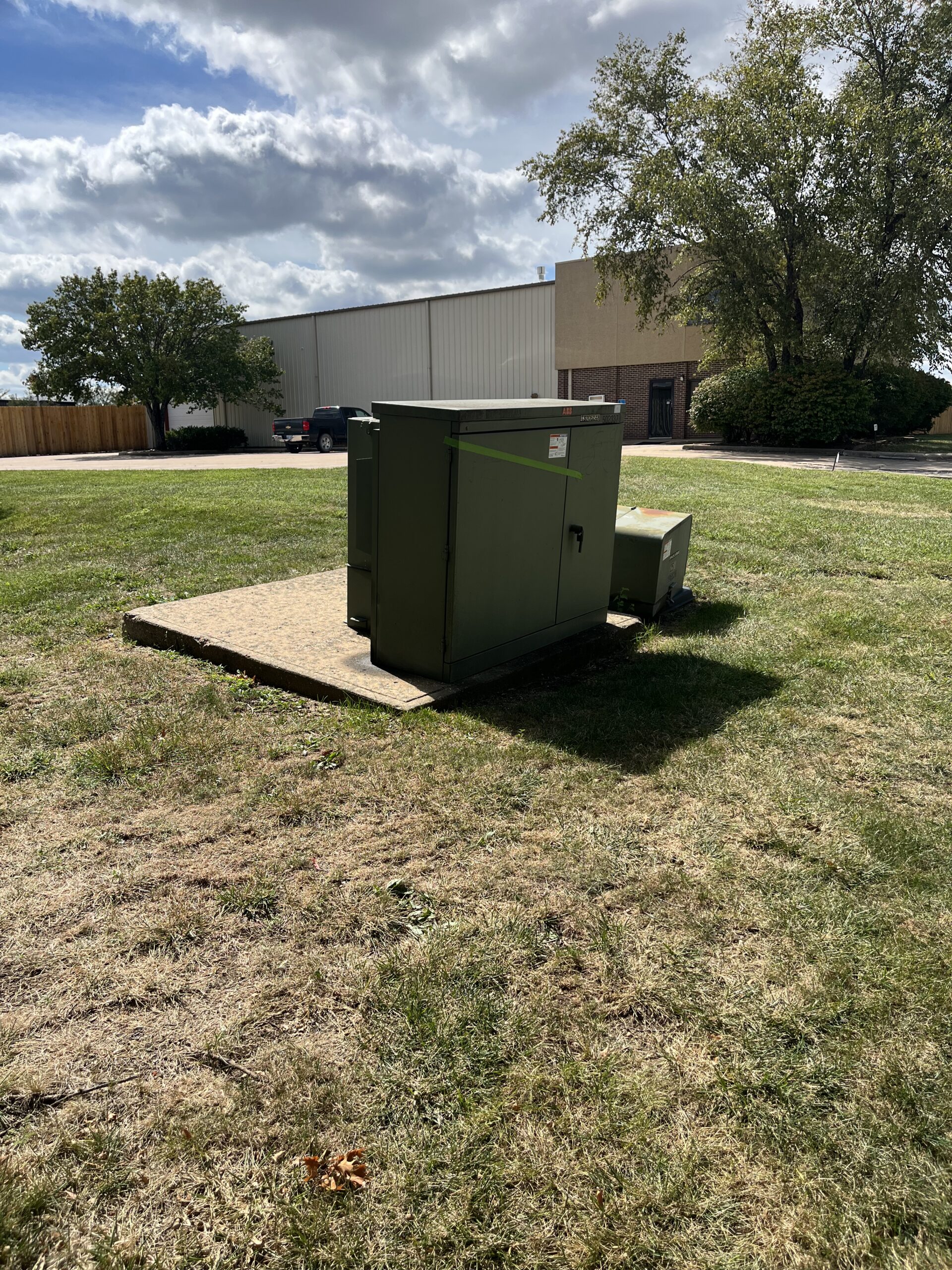
Equipment Pad Concrete Lifting Specialists
Concrete equipment pads need stable, consistent support to properly serve the equipment placed on them. Olympic Concrete Lifting provides equipment pad concrete lifting and stabilization for commercial, industrial, municipal, and multifamily properties throughout the Kansas City area.
When soil settles, erodes, or leaves voids beneath a pad, polyurethane foam can often restore support and correct settlement without unnecessarily removing and replacing structurally sound concrete.
A Stable Pad Starts Below the Concrete
Equipment pads are built to provide a solid base, but the slab itself depends on the material underneath it. Soil settlement, erosion, poor compaction, drainage, and repeated moisture changes can all create empty spaces beneath the concrete.
Once support is lost, a pad may begin to sink, tilt, or move unevenly. Even relatively small changes can become important when the slab supports mechanical, utility, or other equipment that depends on a stable base.
Olympic Concrete Lifting can use concrete leveling & polyjacking to carefully correct settled pads or void filling when the primary concern is restoring support beneath a slab that has not significantly moved.
Signs an Equipment Pad May Need Attention
Visible Settlement
Tilting or Uneven Position
Gaps Beneath the Pad
Nearby Drainage Problems
Why Equipment Pad Stability Matters
Equipment pads are not simply walking surfaces. Their purpose is to provide a dependable base for whatever is installed above them. When the pad loses support, the issue may affect more than the appearance of the concrete.
Restoring support beneath the slab can help create a more stable foundation for the existing pad while preserving the concrete when it remains structurally sound. The condition of the equipment, connections, utilities, and surrounding area must also be considered when determining whether lifting is appropriate.
For pads supporting sensitive or connected equipment, repair work may need to be coordinated with the property owner or the appropriate equipment professional before lifting begins.
Benefits of Equipment Pad Leveling
Polyjacking allows settled equipment pads to be addressed from beneath the slab, where support has often been lost. When lifting is appropriate, polyurethane foam can fill empty spaces and carefully adjust the pad while avoiding unnecessary demolition.
Restore Support
Expanding polyurethane foam fills voids beneath the slab and helps restore contact where soil or supporting material has been lost.
Correct Settlement
Qualifying pads can be carefully raised toward a more appropriate position when portions of the slab have sunk.
Preserve Existing Concrete
A structurally sound pad may be able to remain in place instead of being demolished solely because the soil underneath has moved.
Lightweight Material
Polyurethane foam provides support without introducing the significant additional weight associated with heavier cement-based lifting materials.
Minimal Demolition
Small injection points allow work to be completed from the surface without excavating the entire area beneath the pad.
Fast Cure Time
Polyurethane cures quickly, helping reduce the lengthy curing periods associated with removing and repouring concrete.
Leveling vs. Stabilizing an Equipment Pad
The Pad Does Not Always Need to Be Raised
Leveling
If settlement has caused the pad to sink or tilt, polyurethane foam may be used to fill voids while carefully raising the affected portion of the slab.
Stabilization
If the pad is still positioned correctly but has developed empty spaces underneath it, void filling may be used primarily to restore support without significantly changing the elevation.
The right approach depends on the condition of the slab, the amount of settlement, what the pad supports, and the surrounding site conditions.
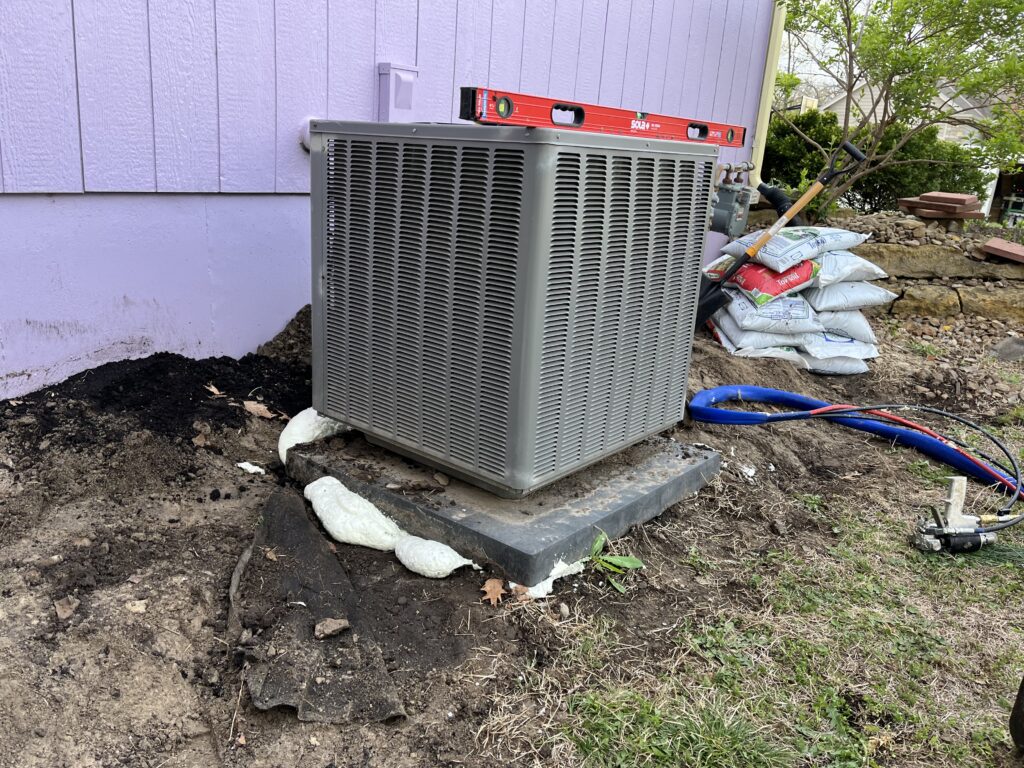
Our Equipment Pad Lifting Process
Evaluate the Pad
We inspect the concrete, visible settlement, surrounding conditions, drainage, and signs that support has been lost.
Determine the Repair Approach
We determine whether the pad primarily needs stabilization, elevation correction, or another solution based on its condition and use.
Inject Polyurethane Foam
Small injection points allow polyurethane foam to expand into the voids beneath the concrete.
Stabilize & Correct
The material fills empty space and restores support while allowing qualifying pads to be carefully adjusted when lifting is needed.
What Causes Equipment Pads to Settle?
Equipment pads can settle when the material beneath them changes after installation. Poorly compacted fill can compress, water can erode supporting soil, drainage can carry material away, and repeated wet-dry cycles can cause the ground to move over time.
The weight placed on a slab can make consistent support especially important. If empty spaces begin forming beneath the concrete, void filling may help address the loss of support before more significant movement develops.
Nearby concrete can experience the same underlying conditions. Properties with settlement around equipment areas may also have problems affecting Shop Floors, Warehouse Floors, Loading Docks, or surrounding commercial walkways.
Where Equipment Pad Lifting Can Be Used
Mechanical Equipment Pads
Generator Pads
Commercial & Industrial Pads
Municipal & Property Equipment
When Replacement May Make More Sense
Not every pad should be lifted.
Concrete that is severely deteriorated, extensively fractured, undersized for its use, or otherwise unsuitable may need to be replaced rather than restored. The equipment installed on the pad and any connected lines or components also have to be considered before changing the slab elevation.
Olympic Concrete Lifting evaluates the condition of the concrete and the settlement beneath it to determine whether lifting, stabilization, concrete repair, or replacement is the more appropriate approach.
Equipment Pad Concrete Lifting FAQs
What causes concrete equipment pads to sink?
Settlement may result from soil compression, erosion, poor compaction, drainage, moisture changes, or the development of voids beneath the slab.
Can an equipment pad be lifted with equipment still on it?
It depends on the equipment, slab, connections, amount of settlement, and site conditions. The area must be evaluated before determining the safest repair approach, and some projects may require coordination with the equipment owner or another qualified professional.
Can you fill a void without lifting the pad?
Yes. If the slab is already at an acceptable elevation but has lost support, void filling may be used primarily to stabilize the pad rather than raise it.
Is polyjacking suitable for heavy equipment pads?
Polyurethane foam can be used for many commercial and industrial slab-stabilization applications, but the load, concrete condition, equipment, and underlying conditions must be evaluated for each project.
Can cracked equipment pads still be lifted?
Possibly. Minor cracking does not automatically rule out lifting, but more significant damage may require concrete repair or replacement.
Does polyurethane add a lot of weight beneath the pad?
Polyurethane foam is lightweight compared with traditional cement-based lifting materials, making it useful where adding substantial additional weight to settled soil is undesirable.
Can equipment pads be leveled indoors?
Some interior commercial and industrial slabs may be candidates for lifting or stabilization. Access, equipment, utilities, and site conditions all need to be considered.
How do I know whether the pad needs lifting or stabilization?
Visible tilting or settlement may indicate that lifting is needed, while hidden empty spaces can sometimes require stabilization alone. An assessment can determine which approach is appropriate.